

Natural flavours: what they actually are, why drinks use them, and what the conversation is getting wrong
There is a lot of noise online about natural flavours in drinks. Some of it is legitimate. Most of it is missing the point. Here is what is actually worth understanding.
Natural flavours have become one of the most debated ingredients in the drinks category. Online, they are called toxic, a scam, something to be avoided at all costs. In the same breath, others argue the concern is completely overblown. The debate generates a lot of heat and not much clarity.

I have been making drinks in Australia since 2017 and have had to think carefully about every ingredient I use. I also think the conversation around natural flavours is often driven more by online noise than actual information.
This piece is an attempt to cut through that. Not to defend natural flavours or attack them, but to explain what they actually are, why they are used, and what the real issues are worth paying attention to.
The first thing worth understanding is that there is no such thing as a single flavour molecule. Take apple. What you are actually tasting when you bite into one is a mix of aroma compounds, tiny molecules that evaporate, hit your nose, and your brain assembles into something recognisable. Esters give you the juicy fruity hit. Aldehydes bring the green freshness. Alcohols and acids round it out and add body.
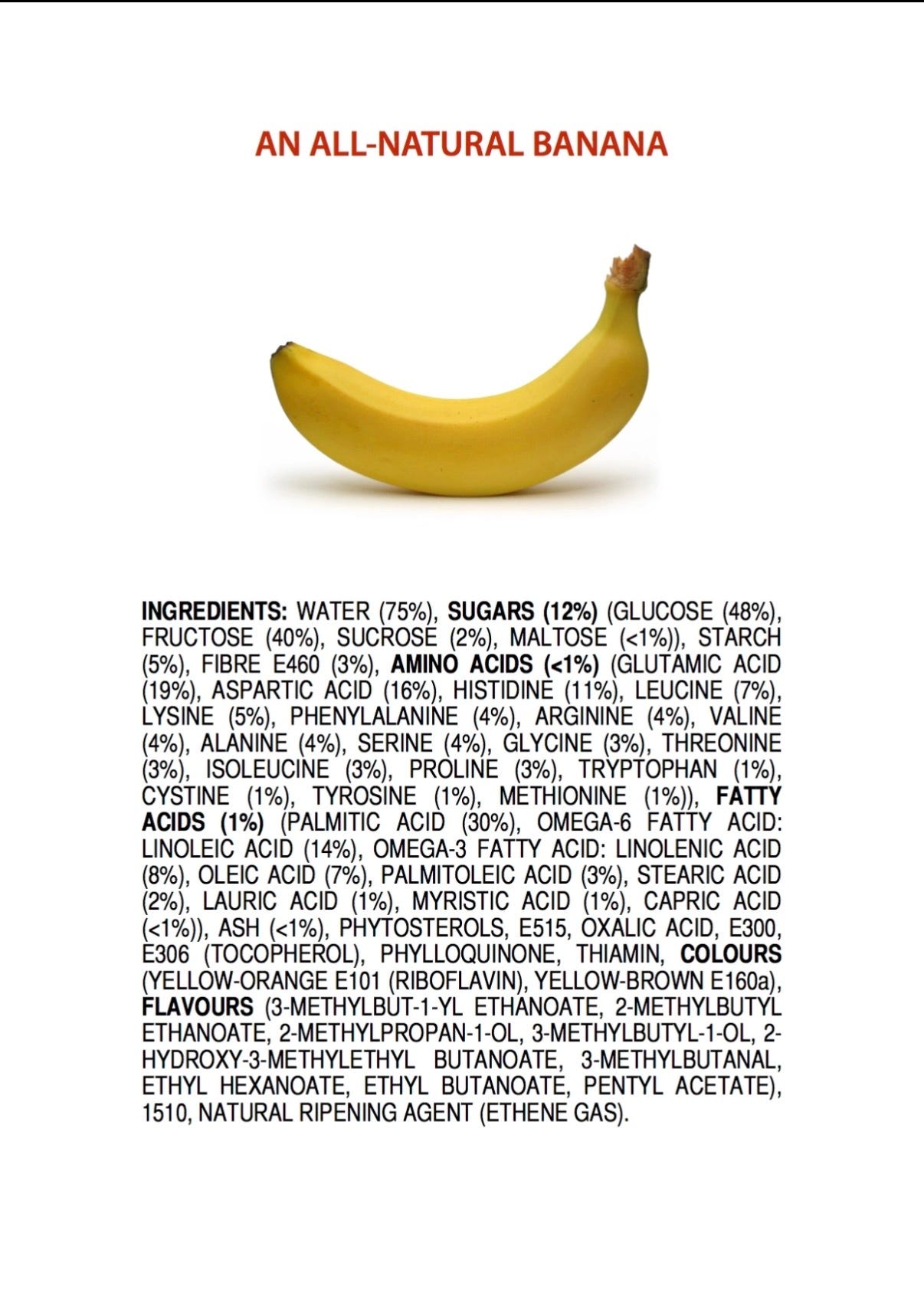
On their own, none of those molecules smell like apple. Together, in the right balance, they do. Move them around slightly and you get a crisp green apple, a soft red apple, or something that drifts toward apple lolly.
A flavourist's job is to understand that blueprint and rebuild it in a way that actually works in a product. Because real fruit does not behave nicely in a drink. It changes with season and ripeness. Once you dilute it into something carbonated or low sugar, many of the more delicate compounds disappear. So flavourists reconstruct the experience using molecules that survive in acid, in carbonation, over months on a shelf.
Those molecules can come from plants, from fermentation, or they can be synthesised to be chemically identical to what exists in nature. This is where it is important to be clear about something the online conversation almost always gets wrong: natural flavours and synthetic flavours are different things. Natural flavours are derived from natural sources, even if they are processed. Synthetic flavours are made from scratch with no natural starting point. Neither is inherently dangerous, but they are not the same, and conflating them is part of why this conversation goes in circles.
Flavour ingredients also go through safety evaluation. In the US, the FEMA Expert Panel has independently assessed over 2,800 flavour substances since 1960 with full toxicological data. The recipes themselves are not disclosed because they are legally protected trade secrets, which is what drives much of the distrust. But the compounds themselves are evaluated.
Real ingredients are expensive, inconsistent, and do not always survive in a drink. They change with season. They fade on shelf. They can be unstable in acid or carbonation. Flavour systems solve real problems around cost, consistency and stability. That is the straightforward reason they exist in most commercial drinks.
There is also a tension that the industry does not talk about honestly enough. People say they want natural ingredients. They also want no sugar, no carbs, long shelf life, and a consistent product experience. Those things do not always coexist. Apple juice has sugar in it. A drink that tastes like apple but has no sugar requires something else to do that work.
The harder observation is this: the people most vocal about natural flavours online are often making different choices at the shelf. Purchasing behaviour and expressed preferences diverge in this category more than most. That is not a criticism. It is just worth being honest about.
In Australia, the Food Standards Code under FSANZ requires that flavours appear on a label as the single word flavour or flavouring. That is it. Unlike in the US, there is no mandatory distinction between natural and synthetic flavours on Australian consumer packaging. Those definitions exist for industry classification purposes but are not required to appear on any label a consumer would see.
So when you see the word flavour on an Australian drink label, you are getting less information than you might think, not because of any conspiracy, but because that is how the regulatory framework is structured. Flavour recipes are closely guarded intellectual property and are unlikely to be disclosed in detail. But there is a meaningful difference between protecting a recipe and giving consumers no context at all. The industry could do better here.
The conversation about whether natural flavours are good or bad is a distraction from a more significant issue: provenance.
I work directly with Indigenous suppliers for native botanicals. The ingredients I source through those relationships are tied to country, to First Nations knowledge, to supply chains built over a long time with real people. That matters to me and it matters to how we build our products.
You can also buy a native botanical flavour from any flavour house tomorrow. No seasonality, no supply constraints, no relationship, no connection to the people or the place. The same name can end up on a label with nothing behind it. The traditional owners receive nothing. The story gets borrowed without the substance.
That gap, between an ingredient that carries genuine provenance and a flavour that borrows a name, matters more than whether the molecules are derived from a natural source. It is the conversation the industry is not having loudly enough.
We are all looking for better quality food and drinks. That is a good thing. The drinks category reflects that shift clearly. People are not just looking for something that tastes good anymore. They want functional ingredients, probiotics, adaptogens, real provenance, transparency about what is in the glass. That scrutiny is healthy and worth taking seriously.
But scrutiny based on misinformation is not the same thing as scrutiny based on actual understanding. Natural flavours are not the enemy. Synthetic flavours are a different conversation. The real issues worth paying attention to are transparency, what the label does and does not tell you, and provenance, whether the ingredient behind the name is the real thing.
Make your own call. Just make it based on something better than a comment thread.
Leave a comment